


Hair loss in men is a widespread concern, affecting up to 50% of males over the age of 50 globally. While many factors can lead to hair thinning and baldness, the most common cause is a condition known as androgenetic alopecia (AGA), also referred to as male pattern baldness. This condition has a well-established genetic and hormonal basis and has been the focus of numerous clinical studies and medical journals over the last few decades.
Types of Hair Loss in Men
Although this article focuses on androgenetic alopecia, it’s essential to understand that hair loss in men can result from several different causes:
- Telogen Effluvium – Temporary shedding due to stress, illness, or medications
- Alopecia Areata – An autoimmune disorder that causes patchy hair loss
- Scarring Alopecia – Irreversible hair loss due to inflammation and damage to follicles
- Traction Alopecia – Caused by prolonged physical tension on the scalp
Each type has a different pathology and treatment, but male pattern baldness, or androgenetic alopecia, is by far the most common and chronic type.
What Is Androgenetic Alopecia (AGA)?
At the core of male androgenetic alopecia is the hormone dihydrotestosterone (DHT), a potent derivative of testosterone. In genetically predisposed individuals, DHT binds to androgen receptors in hair follicles, particularly in the scalp’s frontal and vertex areas, leading to follicular miniaturization. Over time, this process results in progressively thinner hair and eventual follicle dormancy.
According to a comprehensive review published in Endocrine (Lolli et al., 2017), the interaction between DHT and hair follicle receptors alters the normal hair growth cycle, shortening the anagen (growth) phase and lengthening the telogen (resting) phase. This disruption is a key factor in the progressive nature of androgenetic alopecia.
Source: Lolli F. et al., Androgenetic alopecia: a review, Endocrine, 2017 – DOI: 10.1007/s12020-017-1280-y
Genetics and Hormones: The Key Drivers
DHT and Follicle Sensitivity
DHT is synthesized from testosterone by the enzyme 5-alpha-reductase. In individuals with AGA, hair follicles in the frontal and crown areas are hypersensitive to DHT. Over time, DHT causes these follicles to shrink and produce thinner hairs – a process known as follicular miniaturization.
Genetic Factors
Research published in The Journal of Investigative Dermatology highlights that polymorphisms in the AR gene (androgen receptor gene) on the X chromosome are strongly associated with AGA. This means men may inherit the predisposition for hair loss from their maternal side.
Stages of Androgenetic Alopecia
AGA typically follows a predictable progression, often classified using the Norwood-Hamilton Scale. The earliest sign is temporal recession, followed by thinning at the vertex (crown). As the condition advances, these areas may merge, leading to extensive baldness.

Treatments for Male Hair Loss
Though AGA is a progressive and chronic condition, several scientifically-backed treatments can slow or reverse the process. Most treatment regimens aim to:
- Block DHT production
- Stimulate hair follicle growth
- Improve scalp circulation
- Replace lost hair through transplantation
1. Medications
- Finasteride: A 5-alpha-reductase inhibitor that lowers DHT levels; proven to stop or slow hair loss in ~85% of users.
- Minoxidil: A topical vasodilator that prolongs the anagen phase; approved by FDA.
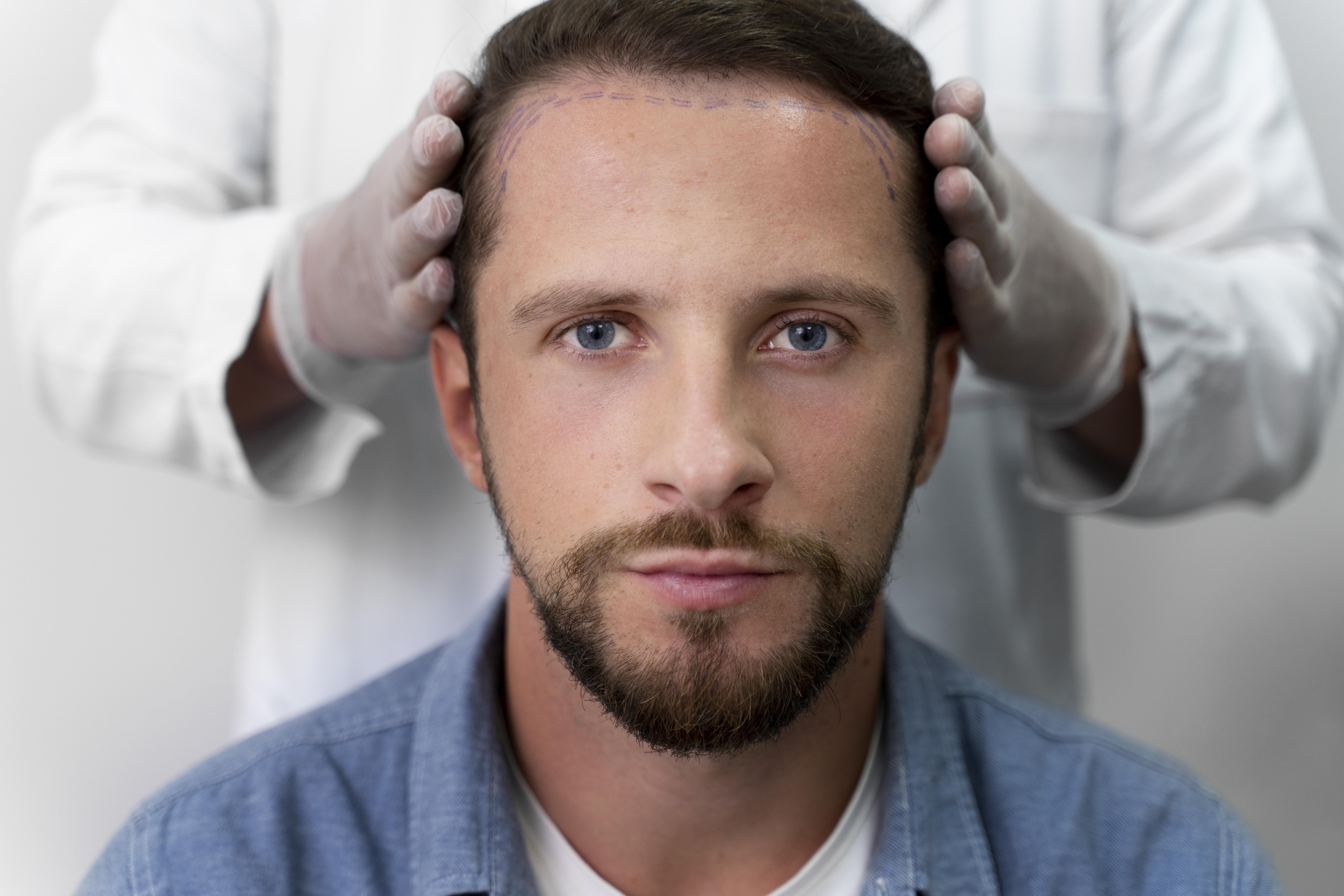
2. Hair Transplant Surgery
- FUE (Follicular Unit Extraction), FUT (Follicular Unit Transplantation), and DHI (Direct Hair Implantation) are the most advanced techniques today.
3. Low-Level Laser Therapy (LLLT)
- Laser caps, brushes, and in-clinic treatments stimulate follicles through photobiomodulation. Effective for early to moderate AGA stages.
4. Platelet-Rich Plasma (PRP) Therapy
- Injections of platelet-rich plasma into the scalp to promote healing and growth.
Conclusion
Androgenetic alopecia is a complex condition influenced by genetics, hormones, and time. Understanding the biological mechanisms behind hair loss empowers patients to seek effective treatments and preserve or restore their hairline. Fortunately, today’s science-backed solutions – from medications to surgery – offer real hope to millions of men worldwide.
Stay tuned as we publish detailed guides and reviews on each treatment option. At Clinic Buddies, we aim to be your trusted source for navigating the journey to hair restoration. Ready for your hair transplant? Let’s plan your treatment together.


Leave a Reply